



What makes a form interactive
A static form is a list of fields. Everyone sees the same ten inputs, answers the ones that apply, skips the ones that don't, and a good share of people give up somewhere in the middle.
An interactive form responds to the person filling it in. It asks a question, uses the answer to decide what to ask next, and can end somewhere different depending on the path taken.
That difference matters most on longer forms. If you need ten pieces of information, a static form shows ten fields. An interactive one might ask four — the four that are actually relevant to that person.
The four things that make a form interactive
1. Conditional logic
A follow-up question appears only when it's relevant. Someone who says they're buying for a team gets asked about team size; someone buying for themselves never sees that question.
2. Branching
Different answers send people down different paths, ending on different steps or different offers.
3. Scoring
Answers carry point values, so an outcome can depend on a total rather than on mapping every possible combination.
4. Dynamic content
What's displayed changes based on what's known — earlier answers, the page they're on, or what's in their cart.
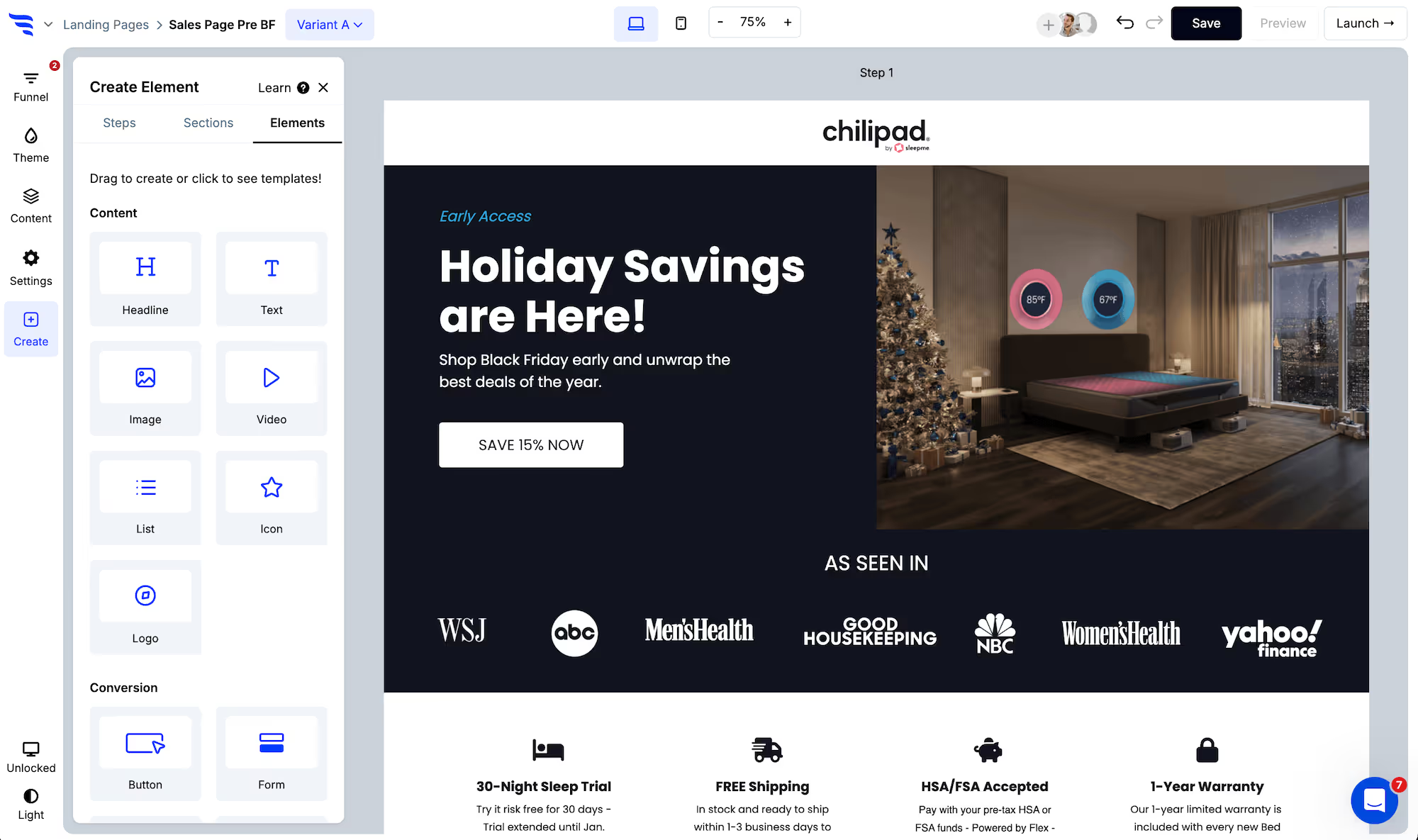
Step 1: Add a form or quiz element
Click to add an element and choose the form or quiz element type. Start from a template or build from scratch.
.avif)
Step 2: Plan the branches before you build
This is the step people skip, and it's the one that saves time.
Sketch which answers lead where. Most interactive forms only need two or three genuine branches — if you're drawing more than that, scoring is usually the better tool.
Only branch where the follow-up genuinely differs. Adding logic for its own sake makes the form harder to maintain without helping anyone.
Step 3: Add your questions
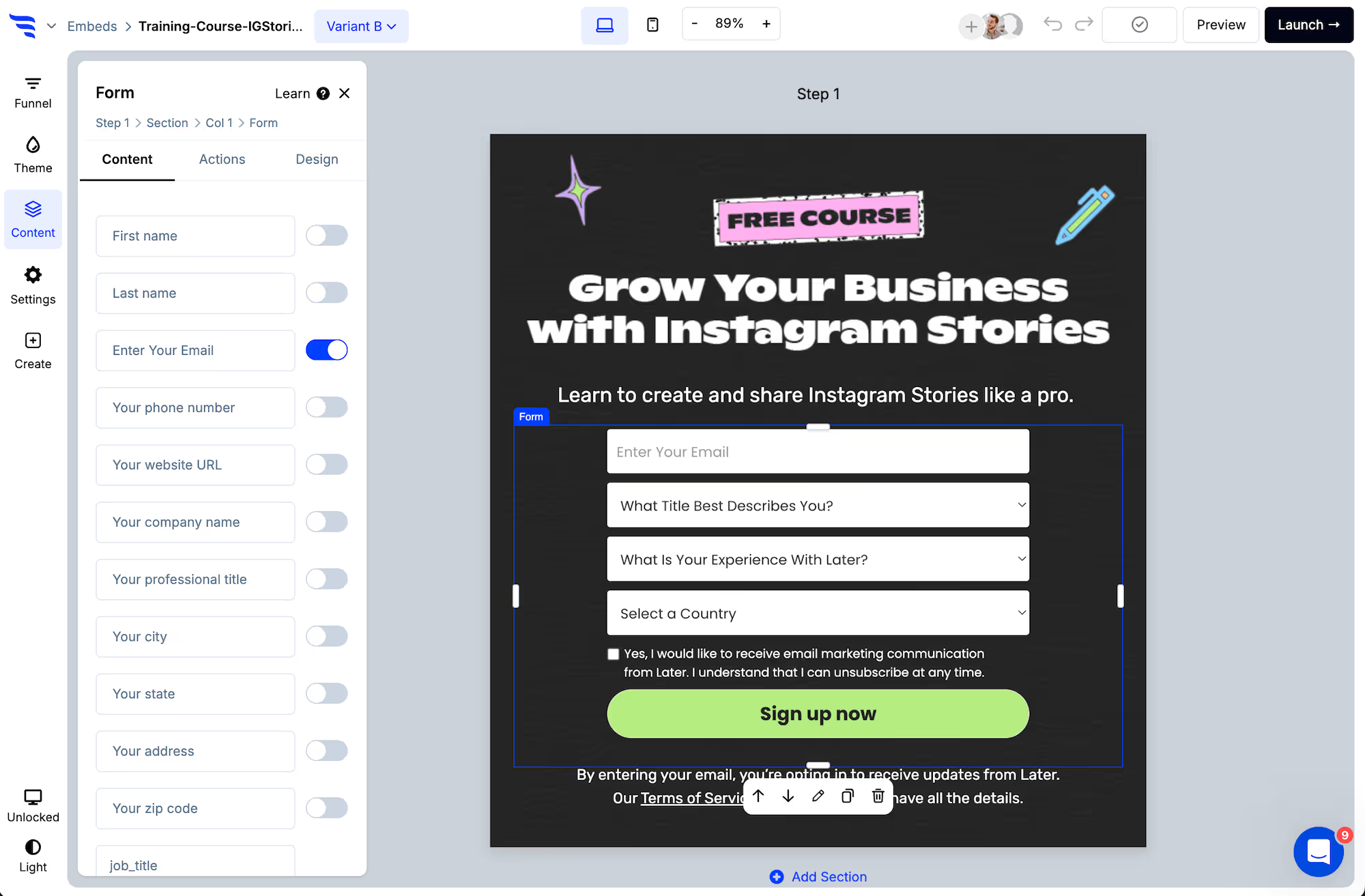
Toggle on the fields you want, then click to add custom fields at the end of the list.
.png)
Field types include text, dropdown, radio, checkbox, paragraph, numerical input and range sliders.
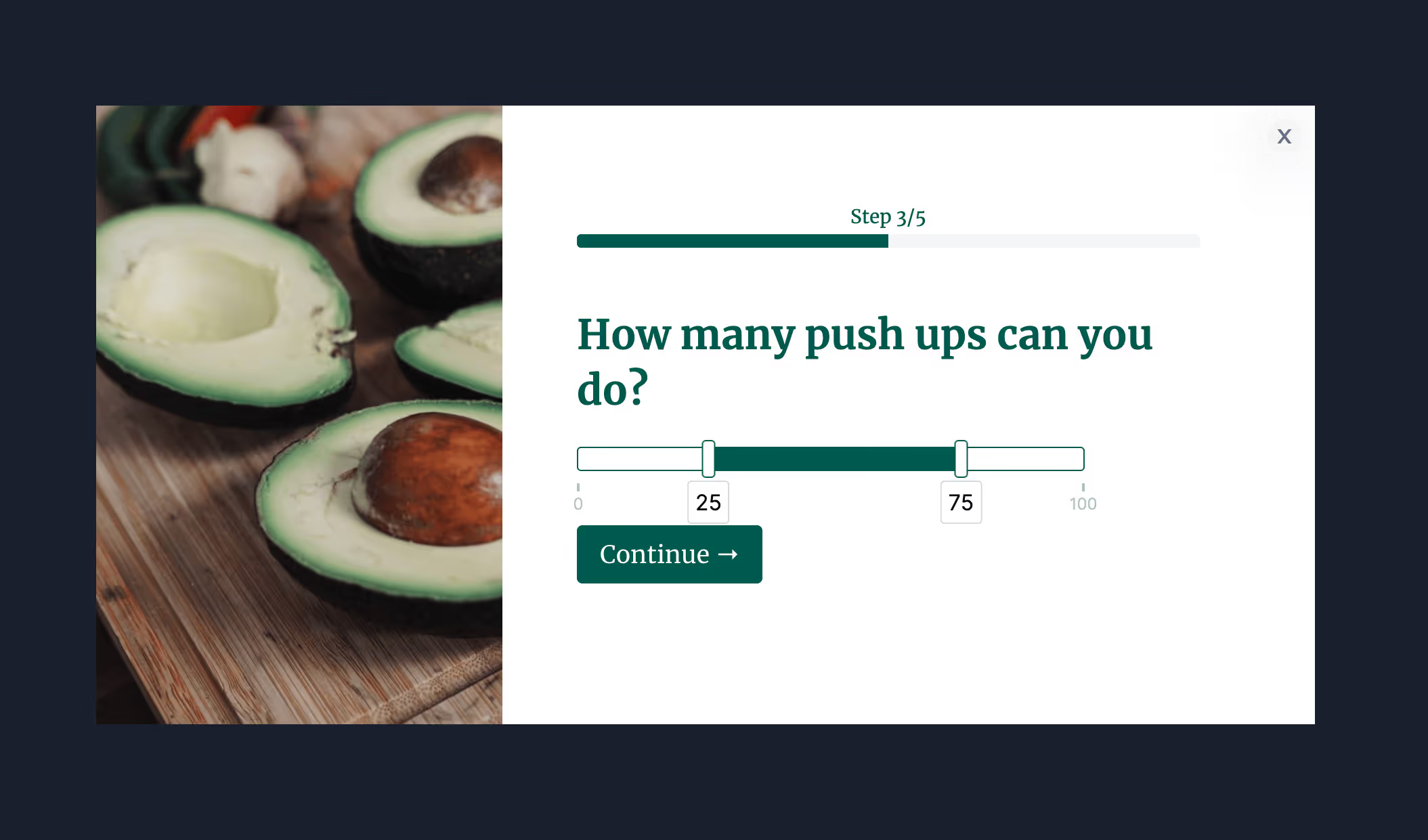
For quiz elements, each answer carries a label and a value — the label is what the person sees, the value is what your conditions match against. Keep values short and consistent, because they're what the logic runs on.
.avif)
Step 4: Add scoring where branches would multiply
Answers can increment or decrement a score.
.avif)
This is the answer to combinatorial explosion. Five questions with four answers each is 1,024 possible paths — unmappable one by one. Score the answers and route on ranges instead, and you're maintaining three rules rather than a thousand.
.avif)
Step 5: Set the conditional actions
Select the element and open the "Actions" tab. Set the default action — what happens for everyone — then click "Add Conditional Action" to override it for people meeting your conditions.
.avif)
Conditions can match on answers, score ranges, page URL, UTM parameters, visit history, and contact data from your connected email platform or CRM.
.avif)
Actions include jumping to a specific step, redirecting to a URL, showing a message, opening another campaign, and syncing to a different list or field.
Step 6: Show dynamic results
An interactive form can end on something built from the answers. Add a product element to the final step and filter it conditionally, so the recommendation reflects what the person told you.
.avif)
Step 7: Style it once
Theme-level styling covers headings, buttons and progress bars across every step, so branches stay visually consistent without styling each one.
.avif)
Show the progress bar. On a branching form people can't see how much is left, and a progress indicator measurably reduces abandonment.
Step 8: Test every branch
Preview and walk each path yourself. Automations don't fire in preview, so you can test freely without creating contacts.
The failure mode with interactive forms is a branch nobody checked — a condition that never matches, leaving someone on a dead end. Walking each path takes a few minutes and catches it.
Step 9: Read the drop-off per question
The funnel breakdown report shows where people stop, question by question, and which answers they choose.
.avif)
Two things to look for. A question with a steep drop is either too personal or asked too early. And if one branch takes nearly everybody, that question isn't dividing your audience — it's costing completions without earning anything.
When a static form is the better choice
If you're collecting a name and an email, add nothing. Interactive logic earns its complexity on longer forms — qualification, quizzes, wholesale applications, anything where different people genuinely need different questions.




%20(1).avif)










.svg)
