



Why most feedback forms collect nothing useful
Two things go wrong, and neither is a design problem.
- Almost nobody answers. The standard feedback form opens with an empty text box, which is the highest-effort question you can ask. Most people look at it and leave.
- The ones who do answer are the extremes. Strong feeling is what overcomes the effort, so you hear from the furious and the delighted. The large middle — the people whose behaviour actually explains your numbers — stays silent.
Both are fixed the same way: make the first question cost nothing, then earn the harder ones.
Step 1: Open with a rating, not a text box
.avif)
Add a form element, then make the first field a rating — a 1 to 5 scale, a 0 to 10 NPS scale, or three faces. One tap, no typing, no decision about what to say.
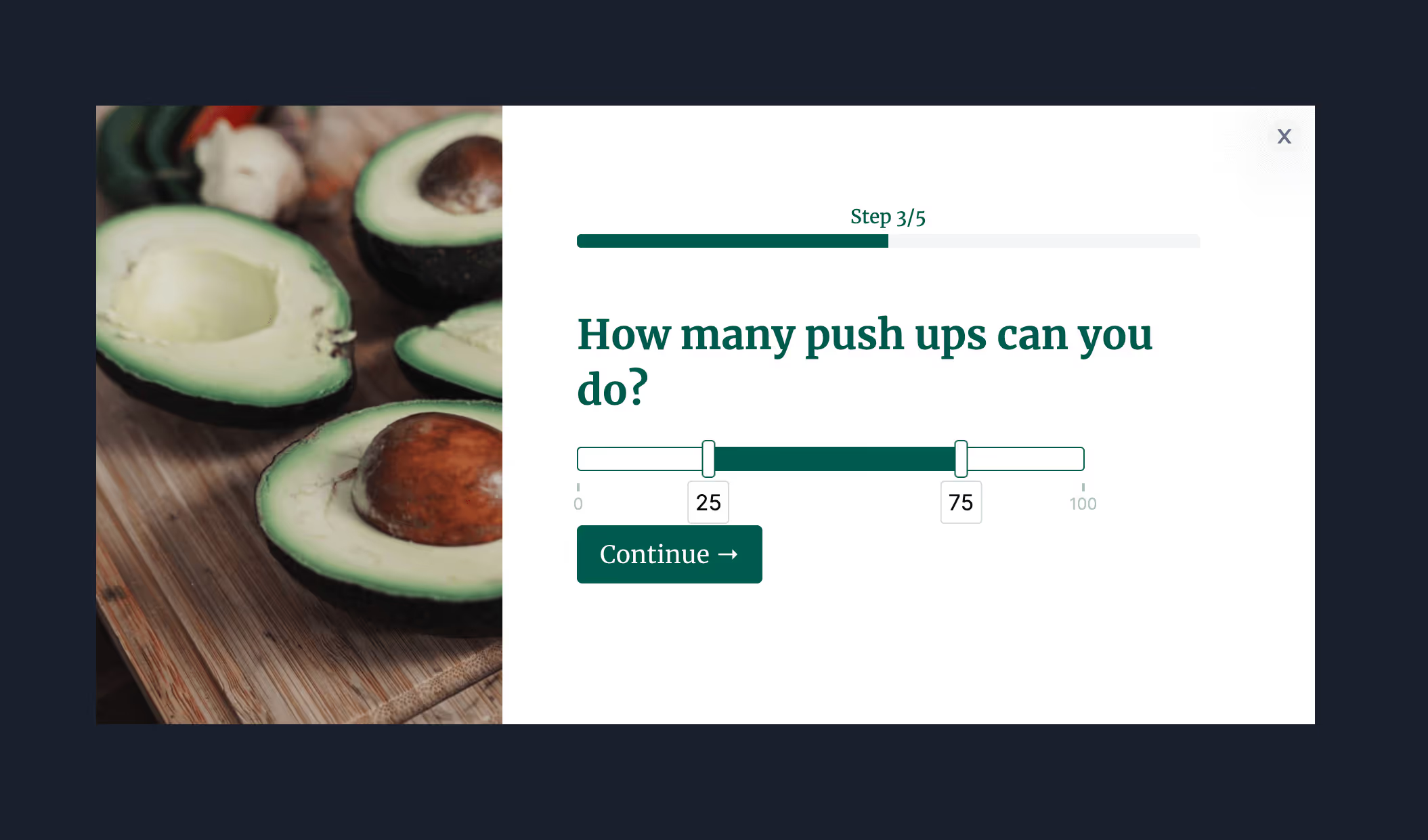
This single change is what moves the response rate. Everything after it is a bonus you are now more likely to collect.
Step 2: Ask why — but only after they have rated
.avif)
Put the open text box on the second step, after the rating is already recorded. Someone who has answered one question is far more likely to answer a second, and if they abandon you still have the score.
Word the follow-up to match the rating. "What went wrong?" after a 2 gets a more specific answer than "Any other comments?" — and "What did we get right?" after a 5 gets you a usable testimonial rather than the word "great".
Step 3: Route by the score
.avif)
This is the part that turns feedback from a report into a process. Use conditional actions so the score decides what happens next:
- Low scores go to whoever can fix it, tagged so you can measure recovery. An unhappy customer contacted within the hour is a retention save; the same customer read about in a monthly summary is already gone.
- High scores see a review request on the confirmation step, while they are still feeling it. This is the highest-converting moment you will ever get to ask.
- Middle scores are the ones worth reading properly. They are usually specific and unemotional, which makes them the most actionable.
Step 4: Ask at a moment that has an answer
.avif)
Timing changes what you learn, so pick the moment to match the question:
- After a purchase — buying experience and checkout friction
- After a support ticket closes — whether the fix actually worked
- On exit, after real engagement — why someone who was interested still left
- Embedded on a page — whether that specific page does its job
Asking on arrival gets you nothing, because the visitor has not experienced anything yet.
Step 5: Decide whether to ask who they are
.png)
There is a real trade-off here and no universal answer. Anonymous feedback is blunter and more honest. Identified feedback is softer but lets you follow up, and following up is where most of the value is.
The workable compromise: keep the rating and the reason anonymous, then offer an optional email on the confirmation step — "want us to get back to you?" People with a real problem give it. People venting do not, and you did not need them to.
If your visitors are known contacts already, ConvertFlow attaches the response to their profile without asking, so you get both.
Step 6: Read the distribution, not the average
.avif)
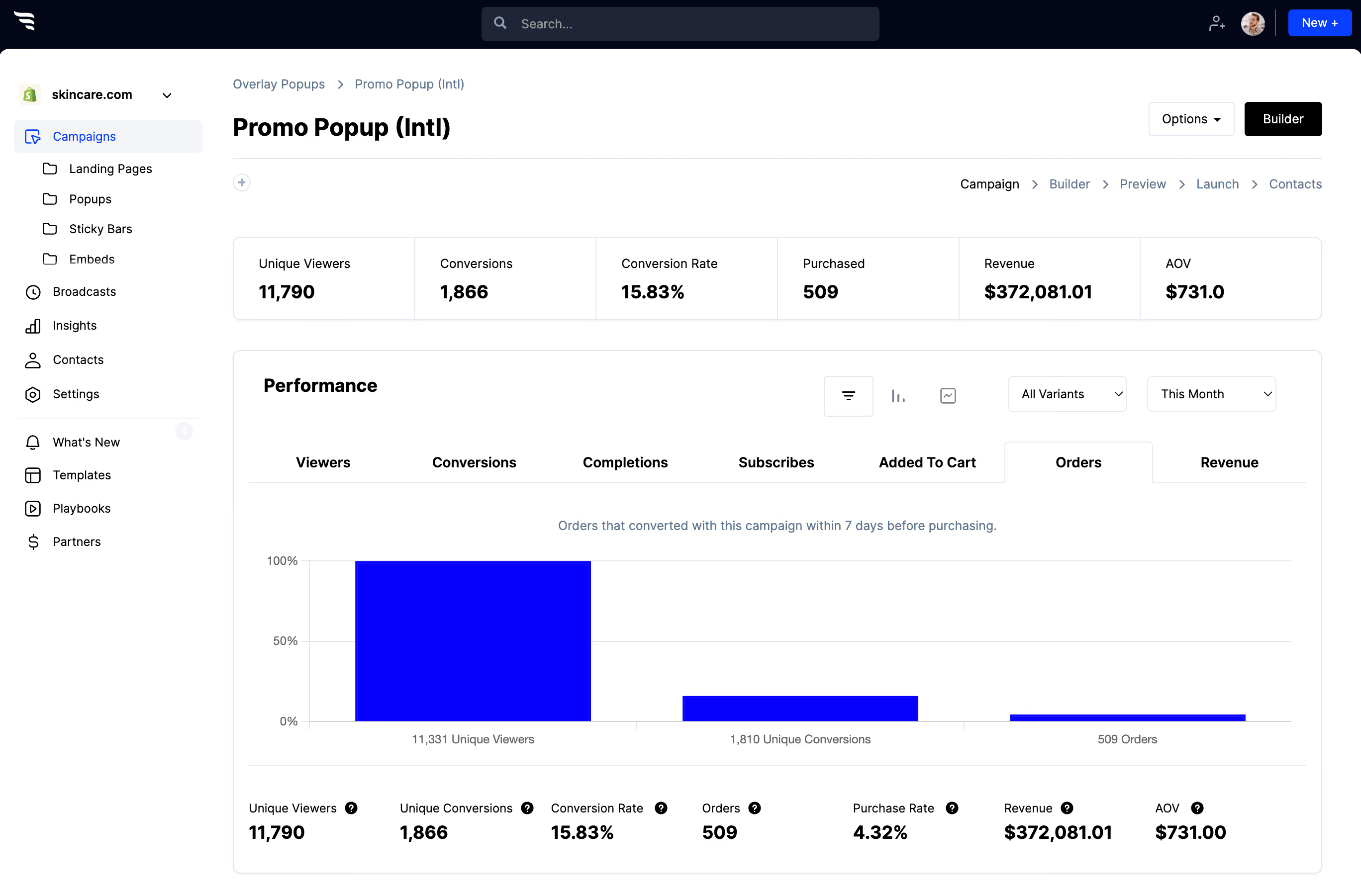
An average of 3.5 can mean everyone is mildly indifferent, or that half your customers love you and half are furious. Those are completely different businesses and they need completely different responses.
Read the shape of the answers, and segment it — by page, by traffic source, by whether they bought. A score that is fine overall and terrible on one landing page has just told you exactly where to look.
What to avoid
- More than three or four questions. Feedback is a favour. Long forms get abandoned and the abandonment is not random — busy customers quit first.
- Required open text. It converts a one-tap answer back into a wall.
- Asking repeatedly. Set suppression so the same person is not prompted every visit.
- Collecting without acting. Feedback nobody reads is worse than none, because it costs goodwill to give.




%20(1).avif)











.svg)
