



When a booking form beats a scheduler
If your availability is simple and every appointment is the same, a scheduling tool showing live slots is the better answer. Nothing here improves on that.
A booking form wins when the appointment isn't uniform — when duration, price, location or who takes it depends on what the client needs.
In that case, showing a calendar first asks the client to pick a slot before either of you knows how long it should be. The form qualifies first, then books.
Step 1: Ask what decides the appointment
Service type, duration, location, and any constraint that changes who takes it or how long it runs.
Nothing else. A booking form isn't intake — the detailed questions belong after the appointment is secured, not between the client and the booking.
Step 2: Build it
.avif)
.png)
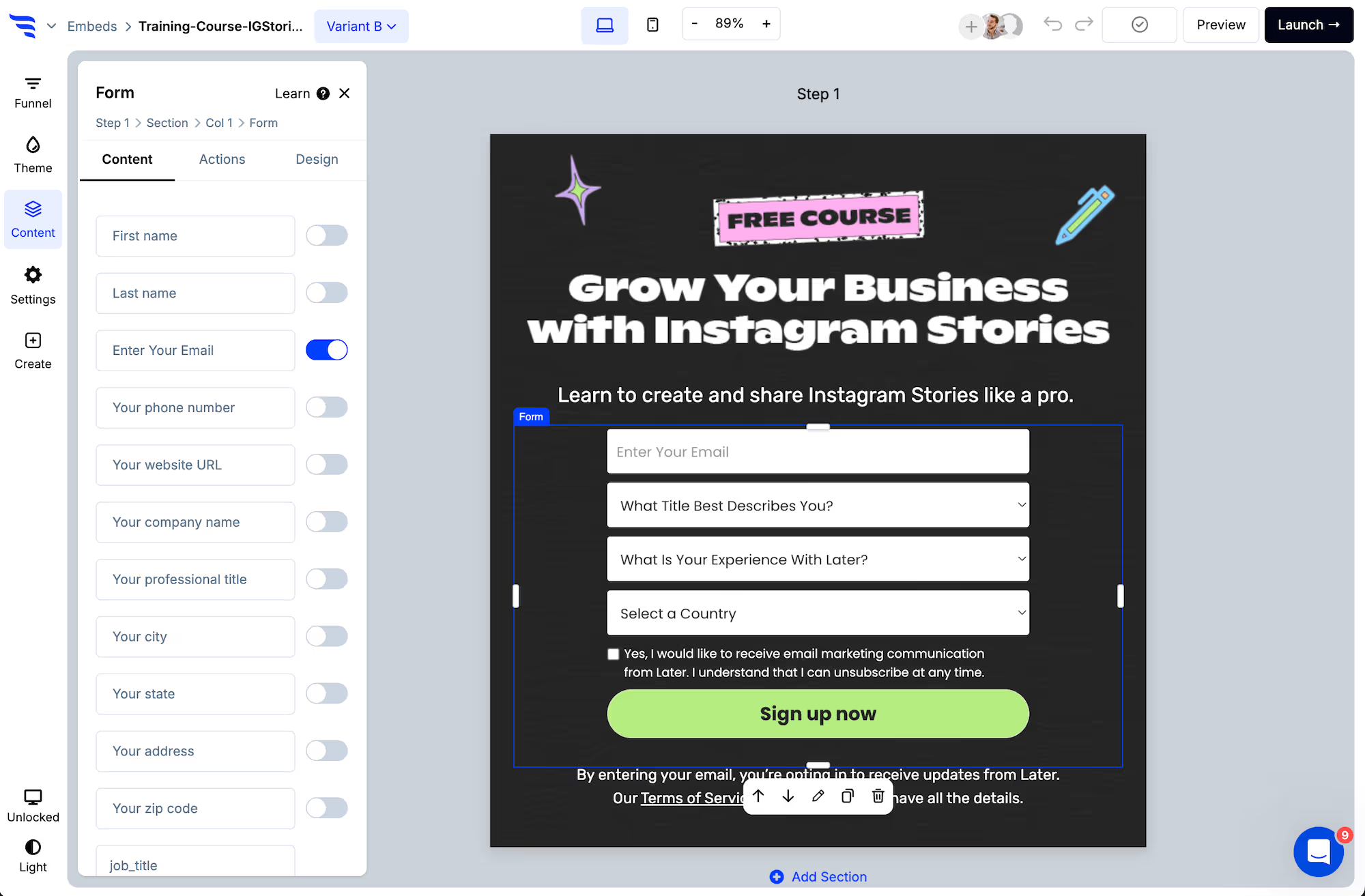
Contact details on step one. Service and timing after — so someone who abandons at the scheduling question is still a lead you can call.
.avif)
Step 3: Verify the phone number

Bookings are confirmed and rearranged by phone. A number that's wrong is a booking you can't confirm and an appointment slot you hold for someone who never arrives.
Verification formats numbers to the international standard, which also matters if you send SMS reminders.
Step 4: Branch by service
.avif)
.avif)
Different services need different follow-up questions, and some need routing to a specific person. Conditional actions handle both at submit.
Step 5: Confirm immediately
.avif)
The confirmation step should say what happens next and when — not "we'll be in touch".
If the booking still needs confirming by a human, say so and give a timeframe. Ambiguity here is why people book with two providers and cancel one.
Step 6: Sync it, and set up a reminder
Push the booking into your CRM or calendar system with every answer on the record.
Then send a reminder before the appointment. Most no-shows are people who forgot rather than people who changed their mind, and a reminder is the cheapest recovery available.
Step 7: Read the drop-off
.avif)
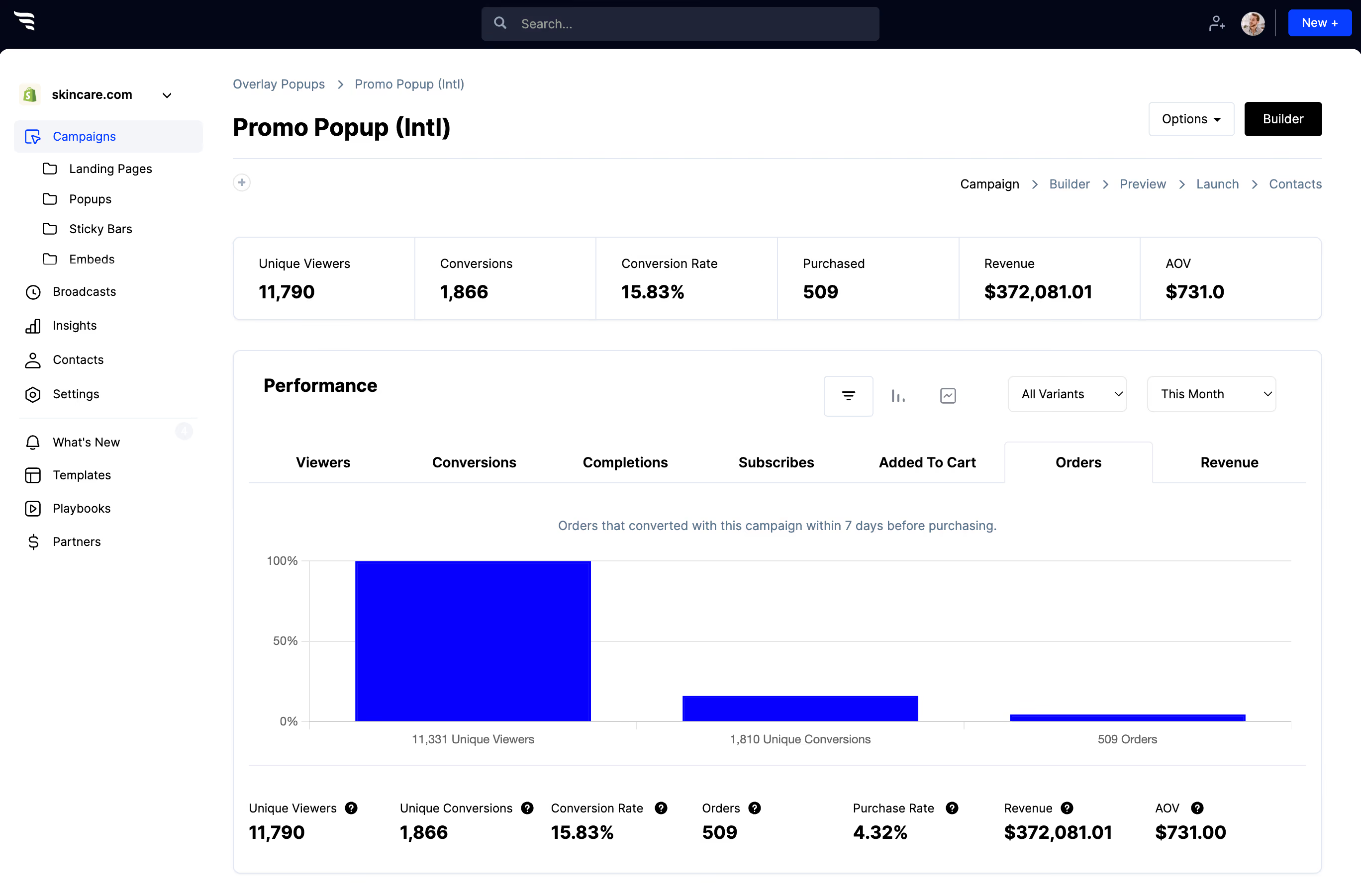
Watch two numbers. Per-step drop-off tells you which question is losing bookings. Attendance tells you whether the bookings you're getting are real.
A form that books more appointments and fills fewer slots has usually made booking too easy relative to the commitment — which is a different problem from a form nobody completes.




%20(1).avif)







.svg)
