

Ecommerce Personalization: What Actually Moves Revenue (ConvertFlow Data + Case Studies)
Last updated September 2026. Based on ConvertFlow's analysis of 2,120 product quiz funnel campaigns and 1,063 lead generation funnels. Methodology: viewer-weighted averages across active, store-connected Shopify funnels; figures are not cherry-picked from top accounts.
Key takeaways
- Ecommerce personalization is the practice of tailoring what each shopper sees (products, offers, and next steps) to their stated needs, instead of sending everyone to the same store.
- Across 2,120 ConvertFlow product quiz funnel campaigns, active Shopify quizzes engage 44.2% of visitors, convert 5.2% of viewers into orders, and earn $9.43 per view at a $264 average order value.
- Personalization pays off most for higher-ticket stores: revenue per quiz view climbs from $0.24 (baskets under $50) to $5.79 ($50–150) to $13.49 ($150+).
- Real brands confirm it: Snyder's Furniture quiz shoppers spend 59% more than the store average; Barkley's Bag lifted AOV 56%; KilgourMD's quiz funnels have driven $10M+ in sales; and the nine- and ten-figure brands (Hims, The Farmer's Dog, Prose) are built entirely on quiz-driven personalization.
What is ecommerce personalization?
Ecommerce personalization is the practice of adapting the shopping experience to each individual visitor (the products recommended, the offer shown, and the next step suggested) based on what that shopper tells you about their goals, rather than showing every visitor the same catalog. The most effective form of ecommerce personalization today is the product quiz funnel: a short set of questions that turns a shopper's stated needs into a personalized recommendation and a guided path to purchase. Across 2,120 ConvertFlow campaigns, these funnels convert 5.2% of viewers into orders, roughly three times the 1.4% to 3% conversion rate of a typical ecommerce store.
Most stores are built the same way for everyone. A visitor lands on a collection page, faces dozens of products, and is left to work out on their own which one fits. For low-consideration impulse buys that can be fine. But for anything a shopper has to think about, like supplements, furniture, skincare, pet nutrition, or high-ticket electronics, that unguided browsing creates hesitation, single-item carts, and drop-off. Personalization removes the guesswork by asking a few easy questions first, then routing each shopper to the right product and the right offer.
It helps to separate personalization from two things it is often confused with. It is not the same as segmentation alone, which groups audiences after the fact; personalization acts in the moment, on the individual, using what they just told you. And it is not limited to "recommended for you" widgets bolted onto a product page. The highest-leverage personalization reshapes the entire path (entry point, questions, recommendation, offer, and follow-up) into one guided funnel.
How does a product quiz funnel work?
A product quiz funnel replaces store-first browsing with a guided sequence. It typically moves through five stages:
- A low-friction entry point. An embedded banner, a "help me choose" button, or a welcome popup invites the shopper into the quiz instead of leaving them to navigate alone.
- A few easy, relevant questions. The quiz asks about goals, needs, or situation in plain language, like "what room are you furnishing?" or "what's your dog's age and main health concern?", not technical specs. Each question is easy to answer and captures zero-party data.
- Lead capture tied to value. Before or alongside the result, the funnel captures email and SMS, framed as the way to deliver the recommendation or an offer, not a generic subscription ask.
- A personalized recommendation. The shopper's answers become a tailored product or bundle, often presented as a plan or routine rather than a single SKU.
- A guided path to purchase. The result page connects directly to add-to-cart or checkout, with the option to add one item or the full recommended set.
Because every step is built and tested without code, marketing teams can build and ship a new quiz any week and continuously optimize, which is how these funnels compound over time.
How much does personalization increase average order value?
Personalization's revenue impact compounds with price: the more a shopper has to consider before buying, the more a guided funnel is worth. Based on ConvertFlow's Product Quiz Funnel Benchmark (September 2026, n=2,120 campaigns), orders attributed to active Shopify product quiz funnels average $264, and revenue per view rises sharply with basket size, which is the clearest evidence that personalization compounds for higher-consideration purchases:
| Basket size band | Median revenue per quiz view |
|---|---|
| Under $50 | $0.24 |
| $50–150 | $5.79 |
| $150+ | $13.49 |
The gap is stark: for a store with a sub-$50 average basket, a quiz earns about a quarter per view; for a $150-plus store, the same quiz view is worth more than $13, over fifty times more. Personalization is not a nice-to-have for high-ticket catalogs; it is where the largest revenue lift lives.
What results do real brands see?
Snyder's Furniture: +59% AOV (furniture)
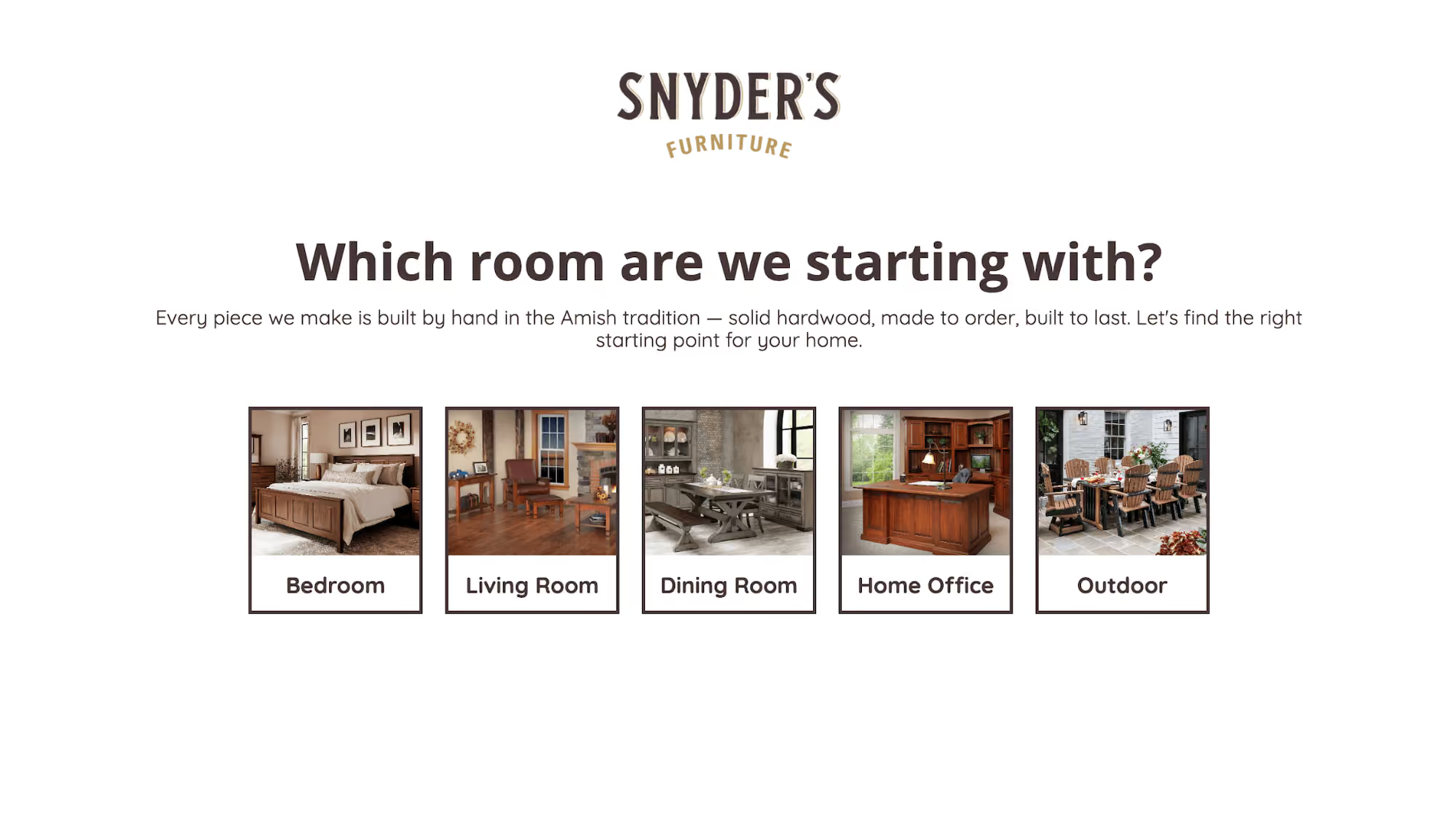
A family furniture retailer since 1983. Shoppers who go through the quiz spend 59% more than the store average ($2,700 versus $1,700) because the quiz starts with "what room are you furnishing?" instead of dropping shoppers into the catalog, and popups act as the on-ramp into the quiz.
Barkley's Bag: +56% AOV (pet)
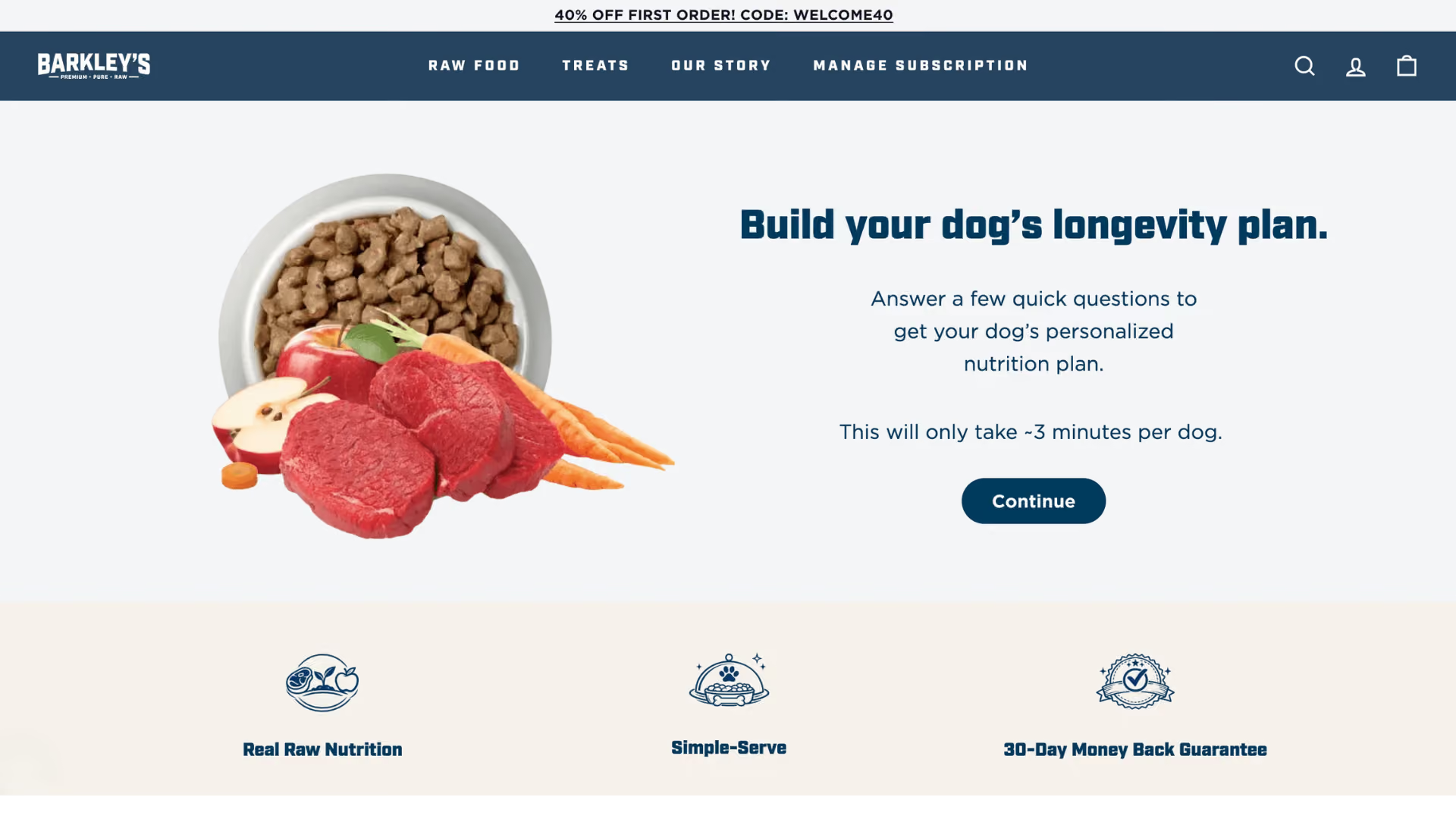
This DTC raw dog food brand replaced store-first browsing with a coordinated funnel system: a welcome-offer popup, a "build your dog's longevity plan" quiz, and an exit-intent popup. The quiz funnel generated a 56% higher AOV than the standard store experience ($53.97 versus $35), and over the last 90 days drove 287 orders and more than $15,000 in funnel revenue.
KilgourMD: $10M+ in sales (health & wellness)
This dermatologist-developed hair and scalp brand runs a portfolio of concern-specific quiz funnels (GLP-1, hormone and menopause, libido) instead of sending paid traffic to a one-size-fits-all storefront. Swapping the post-click experience for personalized quiz funnels they can A/B test has driven $10M+ in sales.

Cristina's Curls: 3x conversion (haircare/skincare)
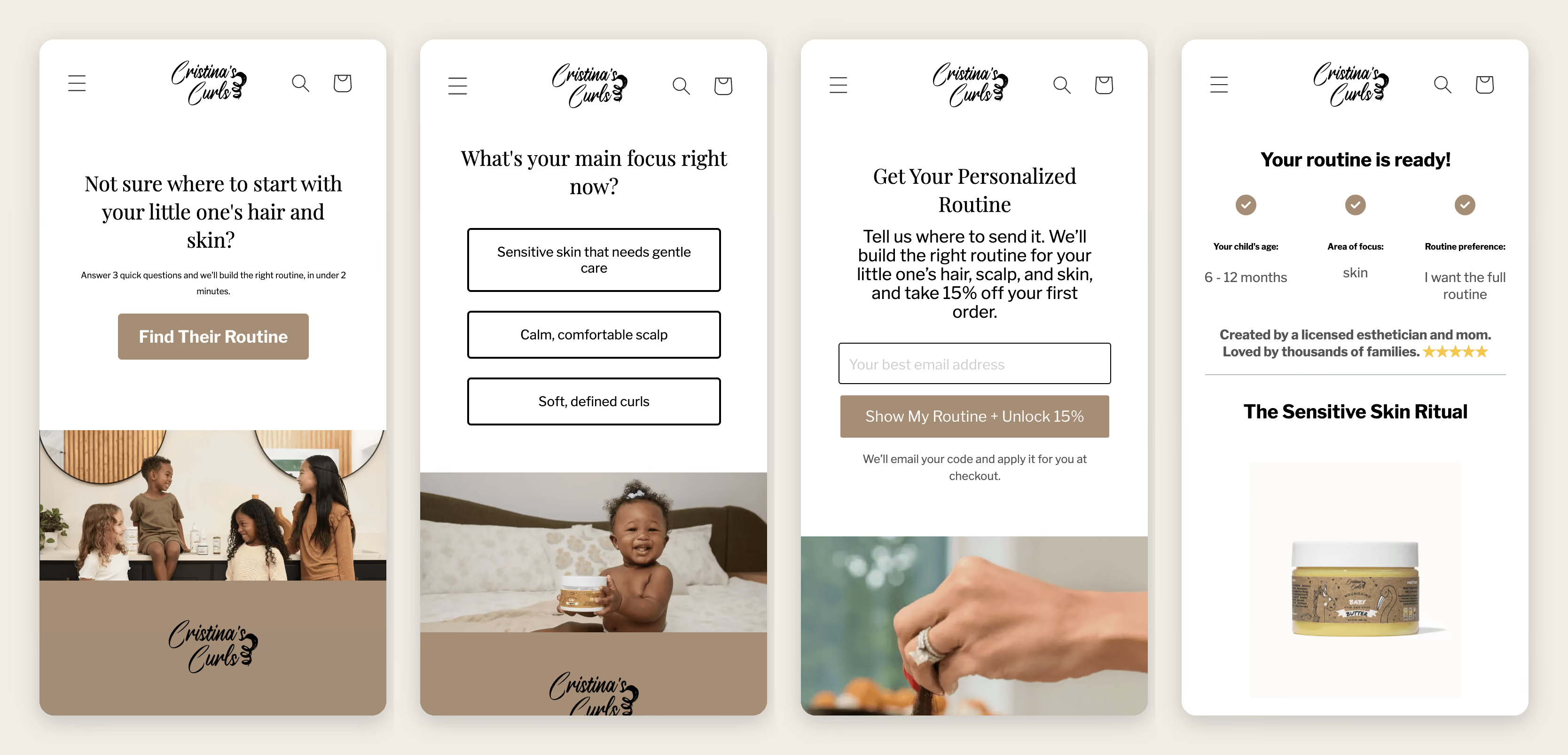
Personalized pages convert at 6.25% (2–3x a typical PDP); quiz completers order at 11.5%; +8–9% AOV.
Fera Pets: 16%+ order rate (pet)
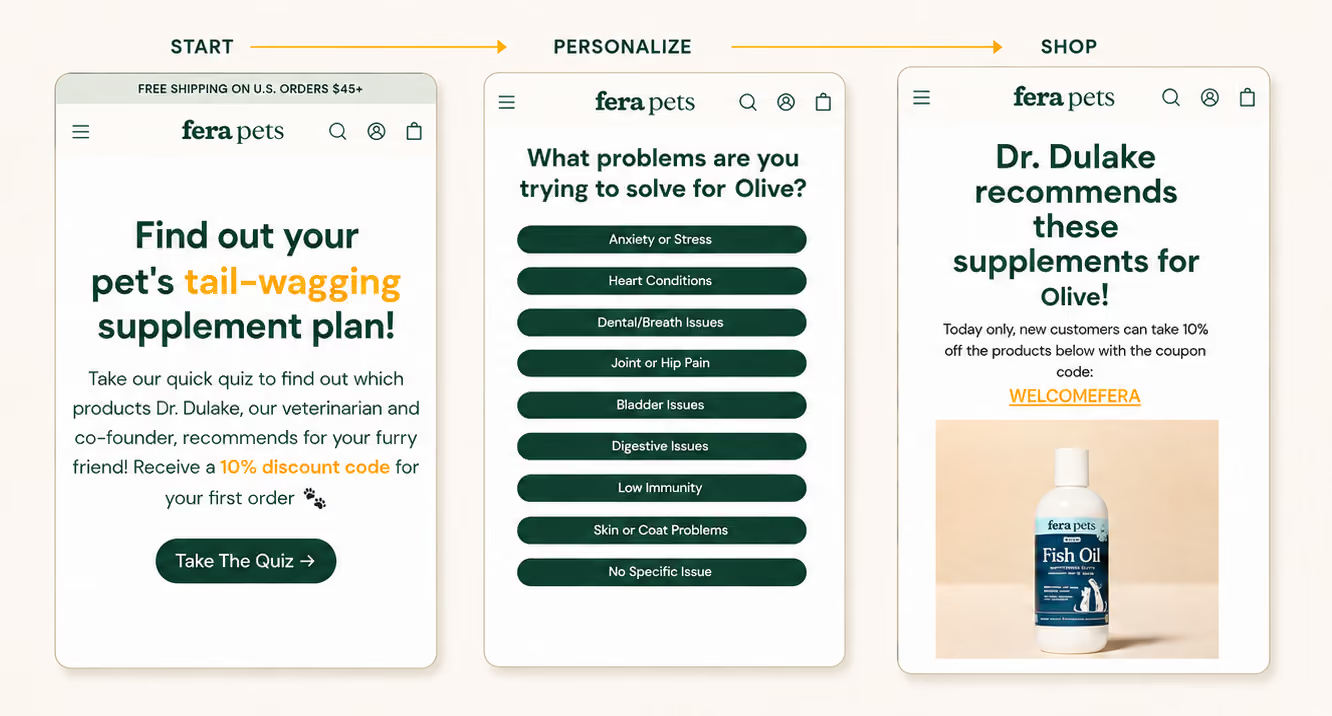
A seven-question pet-health quiz routes each shopper to a vet-led, one-to-one personalized sales page, driving a 16%+ order rate and multi-SKU baskets.
Haus Labs: 16% purchase rate (beauty)
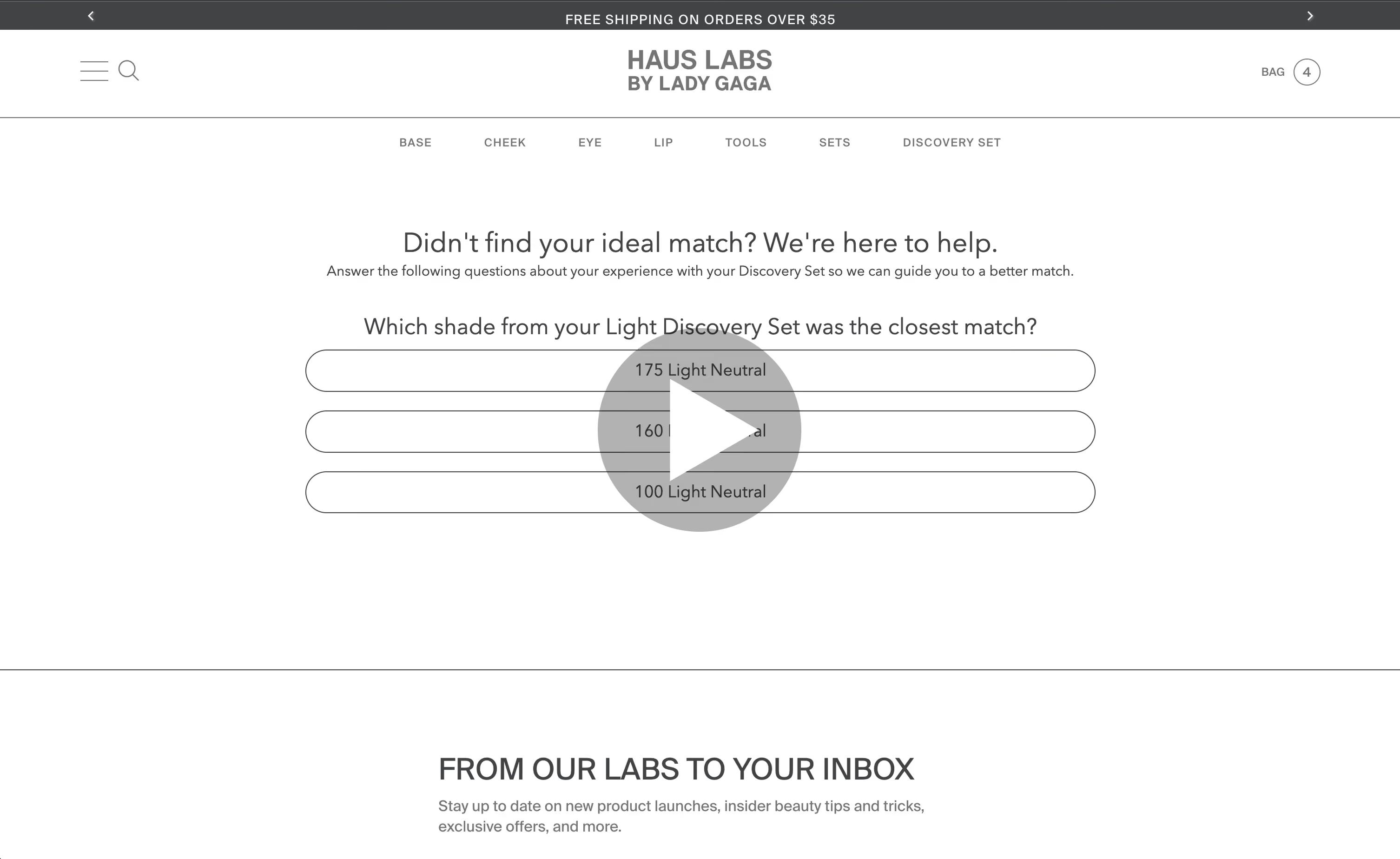
Lady Gaga's clean-beauty brand uses post-purchase shade-match quizzes to turn trial-kit buyers into full-size customers, hitting a 16% purchase rate with up to 75% quiz completion.
Chilipad by Sleep.me: +41% AOV (furniture)
A guided landing page-plus-exit-popup funnel for their premium bundle lifted funnel AOV 41% over the Shopify store baseline during peak season.

What ecommerce operators say
Nothing makes the case for personalization like the operators running it. Here's what ConvertFlow customers say about what guided, personalized funnels did for their revenue.
"With ConvertFlow's quiz funnel, our funnel AOV hit $53.97 vs. $35 on our regular Shopify store, a 56% increase. The quiz does the work of a salesperson, guiding first-time buyers to the right products for their dog instead of leaving them to guess, and the welcome-offer and exit-intent popups capture visitors we used to lose. Across the last 90 days it's driven 287 orders and over $15K in funnel revenue for us. Setup was fast and it runs on autopilot."
Jayce, Ecom 4 Boomers (Barkley's Bag)
"We stopped treating our store like a catalog and started treating it like a story. The sensitive-skin page doesn't list products. It reframes cradle cap and eczema as a whole-bath problem, names the ritual, and stacks the offer so the yes is obvious. It converts at 6.25%, and because we build and test it ourselves in ConvertFlow, we can ship a new version any week without a developer."
Mike Summers, Fractional CMO, Cristina's Curls
"There's a reason the phrase 'you can lead a horse to water' is a cliche. The same principle applies to customers: people are smart. When you leave the ego at the door and guide the conversation, even within a structured digital experience, the results speak for themselves: a 41%+ increase in AOV."
Kate Schiemer, Director of Marketing, Chilipad by Sleep.me
How the biggest brands use personalization
The largest DTC brands, from $165M to over $1B in revenue, run the same quiz-to-personalization playbook we break down on The Funnels Show. The pattern is remarkably consistent: drive traffic into a quiz rather than a catalog, personalize the recommendation, and capture email and SMS before the sale. And notably, none of these brands call it a "quiz" to the shopper. As we put it breaking down Hims: "these nine-plus-figure brands never say quiz. It's always an assessment, always a personalized recommendation."
Hims: $1.5B, built on one quiz
Hims built a $1.5B men's health business on a single quiz funnel that turns ad clicks into subscriptions customers pay for months in advance. As we said in the teardown: "because they collect so much cash upfront, they can afford to outspend a ton of their competitors and dominate their market." The quiz also reframes the purchase from product to service: the tele-health step "makes Hims feel like a service and not just a product," which is what justifies the premium and the recurring plan.
The Farmer's Dog: $1B and profitable
The Farmer's Dog reached $1B in revenue and became profitable (something most DTC brands never do) with a quiz that powers the entire business. The recommendation is personalized down to the dog's name, and as we noted, "this quiz funnel is definitely not just a sales tool. It is part of the product experience from the beginning." That personalization is also the retention moat: "if you get a custom plan for your dog, you're not going to want to give it up for some generic brand."
Prose: $165M, "personalization is the product"
Prose built a $165M hair care brand by putting a five-minute quiz in front of the buy button, the opposite of removing friction. It works because, as we summed it up, "personalization is the product": the quiz answers feed a made-to-order formula. And the payoff shows in retention: "once people buy, more than half of customers buy again, almost double the average repurchase rate in their industry."
Branch Furniture: $12M+, the quiz that styles your office
Branch is the closest parallel to Snyder's: instead of sending shoppers to sort through a catalog, it funnels them into "a highly optimized quiz that styles your office, building a personalized bundle just for you." As we described it, it's "a home office interior designer productized into a multi-step questionnaire," and it drives higher AOV by turning a single-chair purchase into a curated, personalized workspace.
What these brands all have in common
Across every teardown, the same three ideas come up again and again. They're the reason a guided funnel beats a storefront, and the reason personalization is a growth strategy, not just a UX tweak.
They own their audience and their first-party data
The quiz isn't only a sales tool. It's how these brands build an owned audience they can market to for free. Every question captures zero-party data (what the shopper tells you directly) and every funnel captures email and SMS before the sale. As we put it breaking down Prose, that owned data is what "cuts through the noise." While every other brand blasts the same email to everyone, a brand that knows the shopper's name, goals, and concerns can send a message that feels "undeniable that this is focused on that person." The Farmer's Dog takes it further: the data doesn't just personalize marketing, it "feeds retention" and even "fuels their R&D," and it makes every other channel (email, SMS, ads, direct mail) dramatically more efficient. The lesson is consistent: don't rent your audience from an ad platform, own it.
A product catalog isn't a shopping experience
Most stores hand the shopper a catalog and make them do the work. As we said tearing down Branch, "most brands burn ad dollars sending traffic to homepages that you have to sort through yourself." A catalog CMS is built to list every SKU. It is not built to guide a decision. For anything a shopper has to think about, that creates overwhelm, single-item carts, and drop-off. A guided funnel flips it: it acts like a showroom or a salesperson, asking a few questions and routing each shopper to the right product. That's why none of these brands lead with "browse our products." They lead with "build your plan," "design your office," or "get your custom formula" on a dedicated presell page. The quiz becomes part of the product experience, not a detour from it.
The results back it up: roughly 3x the order rate, higher AOV, and far more leads
This isn't just narrative. ConvertFlow's Product Quiz Funnel Benchmark and Lead Gen Quiz Funnel Benchmark (September 2026) show guided, personalized funnels consistently out-convert the standard storefront:
- Roughly 3x the storefront order rate. Across 2,120 campaigns, active Shopify quiz funnels convert 5.2% of viewers into orders. The average Shopify store converts about 1.4% of sessions (Littledata), and the average ecommerce store across industries converts 2.5–3% (Dynamic Yield / IRP Commerce), so a quiz funnel's order rate runs roughly 3x the typical storefront, and closer to 3.7x against the Shopify average.
- Higher AOV on average, and far more in high-consideration categories. Guiding shoppers to the right bundle lifts average order value, with case studies ranging from +41% (Chilipad) to +56% (Barkley's Bag) to +59% (Snyder's Furniture).
- Multiples higher lead capture. Quiz funnels capture 7.85% of visitors as leads (rising to 11.28% for landing-page quizzes) versus a typical website contact form, which converts only about 1% of visitors (and roughly 9% even measured view-to-submission, per Zuko). That's several times the lead capture of a passive form or newsletter signup, because the email and SMS capture is a natural step in delivering the recommendation.
How will AI change ecommerce personalization?
Most of the conversation about AI and ecommerce is about what happens before the click: AI assistants doing product discovery, comparison, and recommendation, then sending a shopper to your site. That shift is real, and it makes ranking in AI answers its own discipline. But the bigger, less-discussed opportunity is what happens after the click: once a shopper lands on your site, AI continues to shape the funnel all the way to purchase. There are two broad models for how that plays out, and they are not equal.
The first is open-ended AI on the page: an unstructured chat assistant, a copilot widget, or an "ask us anything" box. It is flexible, but it puts the burden back on the shopper to know what to ask, and it makes the path non-deterministic: every conversation goes somewhere different, few of them end at checkout, and you capture little structured data you can reuse. It is the AI-era version of dropping someone on a catalog page and hoping they find their way.
The second is the deterministic funnel path, a quiz or guided flow with a fixed set of steps, now enriched with AI rather than replaced by it. The shopper still moves through a designed sequence that reliably ends at a recommendation and a checkout, so you keep the conversion structure and the zero-party data. But AI does the part it is genuinely good at: turning those quiz answers into recommendation copy, product explanations, and offers written on the fly for that specific person. You get the predictability of a funnel and the personalization of a one-to-one conversation at the same time.
This is the model we expect to win post-click: use the quiz to drive shoppers into a structured, personalized experience, and use AI to enrich the messaging inside it, not to replace the funnel with a chat box. The funnel guarantees the shopper reaches a recommendation; AI makes that recommendation feel hand-written.
Cristina's Curls is already doing exactly this. Their quiz funnel uses AI merge tags in the results step: the shopper's quiz answers (hair type, concerns, their child's age) are fed into AI that generates a personalized recommendation on the fly, so the result page reads like advice written for that one shopper rather than a templated product match. It is the clearest early example of the pattern: a deterministic quiz path carrying the shopper to a reliable outcome, with AI-generated messaging making the recommendation feel one-to-one. As their team put it, they "stopped treating our store like a catalog and started treating it like a story." AI merge tags are how they now write that story uniquely for every visitor, at scale, without a developer.
There is a deeper reason the deterministic-funnel model wins in an AI world, and it comes back to who owns the data. AI personalization is only as good as the profile it runs on, and a quiz funnel feeds AI a first-party profile the brand owns: stated preferences, goals, and concerns, tied to a known email and SMS contact, that can be referenced again and again and compounded over time into a richer picture with every interaction. The third-party data now accumulating inside shopping platforms and AI agents is the opposite: the brand can't consistently see it, can't reference it, and can't build on it. A shopper might get a great AI recommendation inside someone else's assistant, but that signal never lands in the brand's own data. So the brand that captures preferences through its own funnel gets a personalization asset that improves every time the shopper returns and powers a smarter merchandising strategy across email, SMS, ads, and the on-site experience; the brand that leans only on platform or agent AI is renting a personalization it can never own or compound. Owning the first-party profile is what makes AI personalization a durable advantage instead of a one-off moment.
FAQ
Does a product quiz increase conversion or just engagement? Both. Across 2,120 campaigns, active Shopify quizzes convert 5.2% of viewers into orders and engage 44.2%.
What's the ROI of personalization for high-ticket stores? Revenue per view reaches $13.49 for $150+ baskets versus $0.24 under $50. Personalization compounds with price.
What's a realistic AOV lift from a product quiz? Real brands report 41% to 59% higher AOV from quiz shoppers versus store browsing: Chilipad at 41%, Barkley's Bag at 56%, Snyder's Furniture at 59%.
Do I need a developer to build one? No. ConvertFlow customers build and A/B test these funnels without code, shipping new versions weekly.
How will AI change ecommerce personalization after the click? AI increasingly shapes the on-site experience, not just pre-click discovery. The most effective model pairs a deterministic quiz funnel (which reliably guides shoppers to a recommendation and captures first-party data) with AI that enriches the messaging, generating personalized recommendations on the fly from the shopper's quiz answers. Because that profile is first-party data the brand owns, it can be reused and compounded over time, unlike third-party data locked inside shopping platforms or AI agents. Cristina's Curls already does this with AI merge tags in its quiz results.




.svg)
